
Do You Have Kidney Stones?
Is there blood when you urinate or do you feel pain coming from your back or pelvis? If your answer to these two questions is yes, then you may have kidney stones in your body and the only way to be sure is to have yourself examined by a doctor.
The two symptoms mentioned are just some of the symptoms that tell you if you have kidney stones. Other symptoms include fevers or chills, feeling or being sick, frequent urinating, and feeling a burning sensation when you urinate.
It is hard to tell just by how you feel if you do have kidney stones because these symptoms are also felt by those who have UTI or urinary tract infection.
When you go to your doctor, he or she will have to do a system of checks. This will include reviewing your medical history, conducting a physical examination, and doing some tests.
The best way to rule out UTI is to extract a sample of urine or blood and scan it using one or two machines which may be a computed tomography (CT) scan, intravenous pyelogram (IVP), retrograde pyelogram, or X-ray.
To give you a better understanding of what these machines are:
The CT scan is used not only to tell if you have a kidney stone because it can be used for other purposes. In the case of kidney stones, the doctor will tell the technician to focus on your urinary system.
The only problem with the CT scan is that it cannot detect small stones when they are located near the bladder. To be sure, an x-ray will be done to tell the doctor its orientation, shape, and size.
The Intravenous Pyelogram or IVP is another option and this can only work after you have been injected with a contrasting agent. Once this is flowing through your kidney, it will be easy for the machine to see if you have a kidney stone blocking the ureter.
There are risks for conducting this test especially if you have a slight allergic reaction to the fluid that was used.
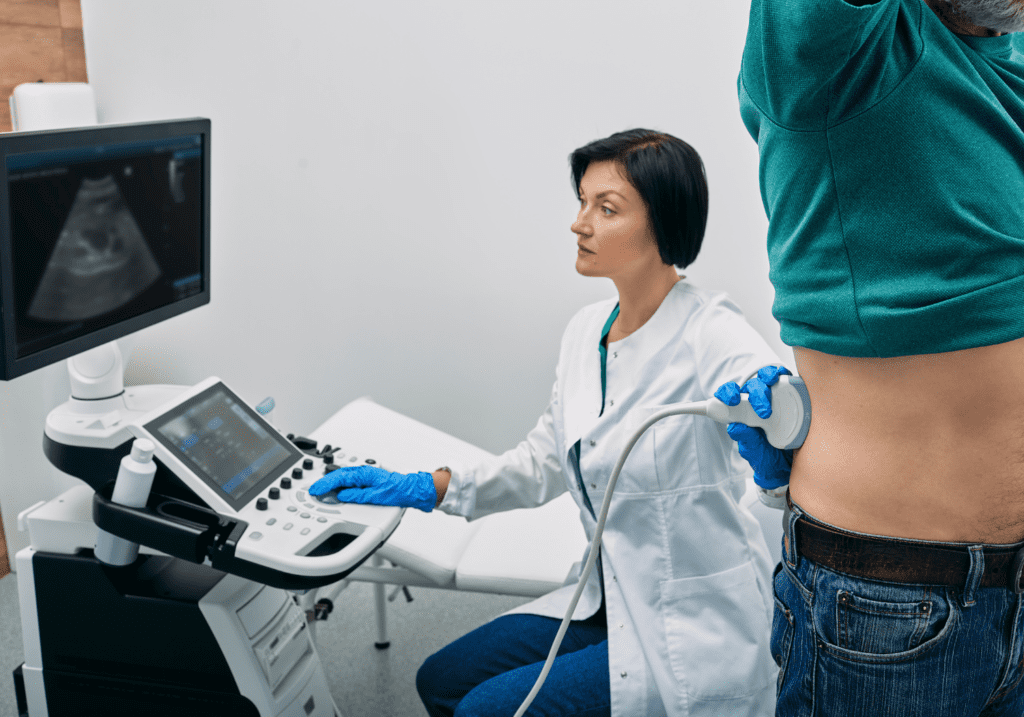
The ultrasound has other uses and letting you know the size of your baby is just one of them. The doctor may also use this device to check if you have kidney stones located in your upper urinary tract or in your ureter. Unfortunately, it cannot be used to check for kidney stones in other parts of the body.
Another test called the retrograde pyelogram is a cystoscopy. This test is similar to the IVP because it also uses a contrasting agent. The only difference is that once you are injected, a slam telescopic instrument is sent to check the bladder.
In most cases, patients who may have kidney stones do not need to undergo these tests because the others mentioned have already confirmed that.
When doctors are sure that you have kidney stones and determine the type this is in your body, only then will they be able to treat it. The doctor may or may not have to give you medication. In extreme cases, surgery may be the only option.
Kidney stones happen more often to men than women. If you feel something wrong down there, don’t wait until things get worse to see your doctor.
Do You Know What a Kidney Stone Is?
These minerals are salts that are found in your urine and when it hardens, it becomes a stone. Most of the time, these are so small that it does not cause any harm but if they get bigger or it builds up, then there is a problem.
Kidney stones do not just stay in the kidney. It can move to other parts of the body. When that happens, you will feel certain symptoms. You could feel the pain coming from your back or pelvis, experience spasms, notice bloody, cloudy, or smelly urine, feel sick, urinate frequently, and have fevers and chills.
It is hard to tell if you have kidney stones because these symptoms also happen when you have UTI or urinary tract infection. Your doctor can only tell which is which after conducting some tests.
The different tests available include blood tests, urine analyses, x-rays, ultrasound, and non-contrast helical computerized tomography. If initial reports and the results confirm that you have kidney stones, then the proper treatment is administered.
Doctors don’t know yet what causes kidney stones. Some believe it is caused by our lifestyle, due to certain medication, post-surgery or therapy, and in rare cases, a genetic disorder. This happens more often to men than women between the 20 to 40 age group.
If you are diagnosed with a kidney stone, you should know that treatment varies from one patient to the next because this depends on the kind of stone found in your kidney.
There are 4 types of kidney stones namely calcium uric acid, struvite, and cystine. The first 2 are the most common and if the size is less than 4 mm in diameter, you can expel it out of your system by drinking water and some medication.
Should the kidney stone be larger than 8 mm in diameter, this is the only time that surgery may be required.
The doctor may perform one of these procedures which include extracorporeal shockwave lithotripsy, ureteroscopic stone removal, and percutaneous nephrolithotomy. Each procedure is designed to shrink the kidney stone and if one treatment does not work, only then will they try something else. Surgery which has been practiced for so many years is now the last option.
Now that you know what kidney stones are, is there a way to stop this from happening? Yes, there is and the most effective way is through prevention. You do this by drinking 3 liters of water or 6 to 8 glasses a day, making some changes in your diet like eating and drinking products that contain calcium, and exercising regularly.
Kidney stones can happen to anyone regardless of age or gender but guys, you should be more careful because you are at greater risk of getting it. If you feel some pain, go and pay your doctor a visit. Don’t wait until it gets worse.
If it is a false alarm, then that is good. But if you do have kidney stones, cooperate with the doctor and follow his or her directions. You should also ask if the kidney stones have caused any permanent damage and what are the risks of the procedure if it requires medical intervention. Kidney stones do happen but don’t worry because it is after all, treatable.