Hemorrhoids 101
Hemorrhoids are generally enlarged or inflamed blood vessels in the posterior rectal region. The most usual symptoms of hemorrhoids are rectal bleeding, blistering, pain and itchiness.
Hemorrhoids can be internal (situated inside the posterior lower rectum) or external (beneath the skin around the anus). These two kinds of hemorrhoids may occur at the same time.
Understanding the Impact of Hemorrhoids
While hemorrhoids are not fatal, they can cause your life to be miserable as they can cause pain, irritation and a nasty sensation in the anal area. The area they are in is severely receptive and vulnerable to chronic damages from poorly managed treatments – a specialized hemorrhoids doctor or surgeon is necessary and it’s often hard to find a medical treatment suitable for your condition.
What are Hemorrhoids?
Hemorrhoids are generally defined as swollen veins in the rectal and anal canal. Veins can be swollen in the interior of the anal canal to form internal bleeding or hemorrhoids. Also, they can be swollen near the aperture of the anal hole to form external bleeding. You can acquire either kind at the same time. The signs and diagnosis are based on what kind of hemorrhoid you have.
What are the Major Causes of Hemorrhoids
The major cause of hemorrhoids is extreme tension or pressure in the anal and rectal region.
Commonly, inner anal tissue is filled with blood to aid with bowel movements. If you put pressure to discard bowels, the tension can cause the anal canal to stretch, tear and be swollen causing hemorrhoids.
Sometimes, hemorrhoids can be caused by diarrhea or constipation. These health conditions can also put extra tension in the anal canal.
Constipation
Constipation is the most common cause for hemorrhoids. Tension in the anal area is caused by bowel movements, if a person is constipated. This will consequently put strain on the blood veins, leading them to become inflamed and irritated. Bleeding in this area is seen, if you are constipated. This is from the blood veins responding to the tension from the bowel movements. In sequence, you may be required to be adept on how to avoid constipation by means of various methods.
Pregnancy
After constipation, pregnancy is the most typical reason for hemorrhoids. This may be caused by different reasons. For instance, the continual tension that is happening in the blood veins in the rectal area can cause irritation. In turn, the blood veins will work harder as a result of a drastic increase of hormone levels. This will then put tension on them, resulting from inflammation and irritation. If a patient is pregnant or expecting to be pregnant, it is very important to know that this is a normal part of pregnancy. However, it is only for a limited period of time and will usually disappear after you have given birth.
Portal Hypertension
Another reason for hemorrhoids is portal hypertension. This is caused by too much pressure from the blood veins that protrude from the intestines to the liver. Consequently, this will lead to a smoother bowel movement and pressure from the blood veins and will cause hemorrhoids as a result. The various kinds of hemorrhoids that happen can lead to irritation and strain, as well as bleeding in the rectal and anal area.
Chronic Venous Insufficiency
This condition happens when the blood veins in the rectal region are delicate, and can easily be damaged. This puts tension on the vessels, as they will have to put extra effort. Basically, the tension is also worsened with prolonged sitting or standing. If you are overweight, do not exercise habitually or you are smoking, it can also result in irritated blood veins.
Inflammatory Bowel Disease (IBS)
Inflammatory bowel disease may also cause hemorrhoids. This happens when you are constipated or you have diarrhea, as well as stomach pain from problems with your digestive system. It may lead to hemorrhoids to react since there is extra tension that is placed on the blood veins. This is very common if the condition is based on constipation.
Having hemorrhoids, it is best to find out what is the reason for the hemorrhoids and why it is happening. After that, you can change specific parts of your lifestyle, such as your food intake to help avoid the hemorrhoids from being a continuous problem.
Who Suffers from Hemorrhoids?
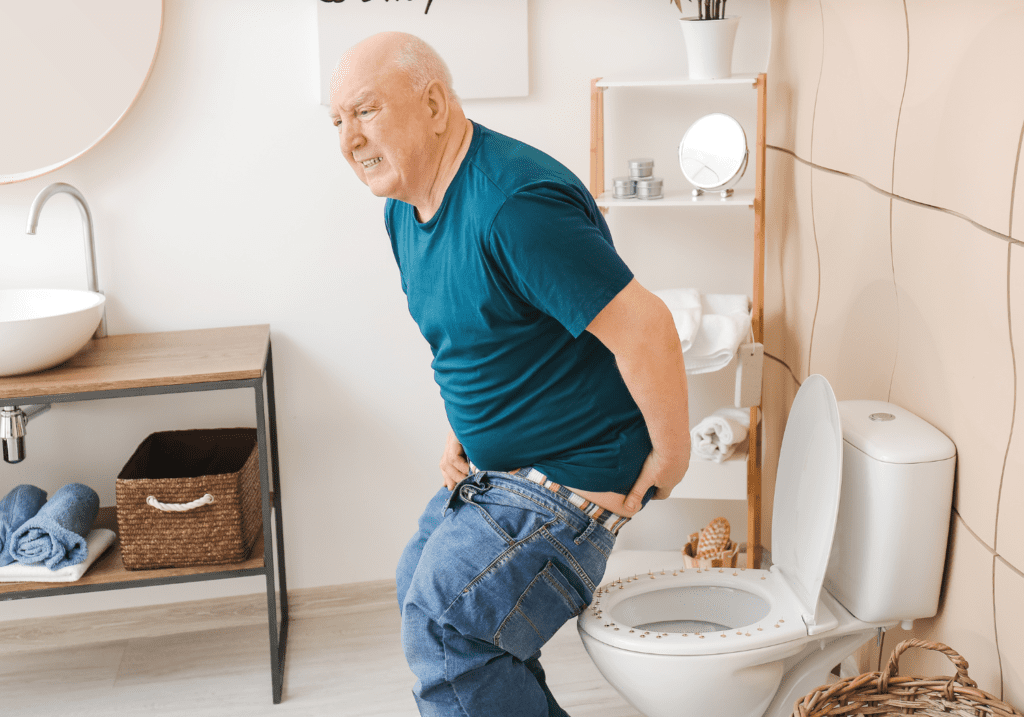
Hemorrhoids are more likely to form in individuals who:
1. Strain to pass bowel movements
2. Have critical constipation, diarrhea or stomach ache.
3. Have the habit or routine of prolonged sitting or standing
4. Older people
5. Pregnant women
6. Have a pelvic tumor
Pregnant women are likely to experience hemorrhoids during the last quarter of pregnancy. This is due to the added tension on the blood veins in the thighs. During labor, when a woman is pushing the baby out, hemorrhoids can also occur.
Also, it is noted that obese persons are more likely to get hemorrhoids than those with normal weight.
Diagnosis of Hemorrhoids
Typically, everyone has internal hemorrhoids, but they are not commonly observable and they usually remain out of sight and show no warning signs. You may not believe it, but about 15 million people from around the globe are bothered by wearisome hemorrhoids year after year.
Suddenly, one’s good-looking base has the insides appear as if they are tearing apart out of it and the hemorrhoids you become aware of may also cause pain, bristles and irritation like nothing you ever felt before.
When the hemorrhoids do originally show symptoms, the typical response is one of alarm, fear, and anxiety.
For most patients, the anxiety of seeing blood smudges all of a sudden, out of extreme unbearable pain from a thrombosed hemorrhoid can be severe. Luckily, hemorrhoids in reality are inflamed blood veins that for most patients are easily cured or treated.
Even though having hemorrhoids is fairly embarrassing because it is associated with bowel movements (a private and discreet body action) and our anus (a private body part) you should not be completely embarrassed when you need a medical examination. Doctors are highly trained, especially the colorectal specialists, to deal with the nasty aspects of hemorrhoids.
The issue of embarrassment may be frustrated even more with hemorrhoids, if we think that by some means they are caused by anal sex. A person might feel that the doctor will follow a trail of a very personal aspect, and will ask questions with the hemorrhoids. Doctors will not ask questions that are too personal, and it is very unethical if they will give prejudice to your condition.
In reality, the problem of hemorrhoids is so widely known in the medical community that doctors are adequately experienced and skilled to perform a plain rubber band ligation or injections to treat the hemorrhoids, while you are inside a clinic or an operating room, or any kind of hemorrhoid medical treatment for that matter. They probably see patients having hemorrhoids every day and are not usually embarrassed by it from any doctor’s experience.
When a patient gets over their emotions of embarrassment, and has them examined by the doctor, the patient often gets a sense of relief when they learn more about them and how to treat them – most likely a fiber intake to start with.
Another great idea is to jot down the hemorrhoid symptoms, so that when a patient discusses the observations with the doctor, it’s just a matter of reading the symptoms out. Even if a person were to get a bit disturbed, all the hemorrhoid symptoms can be expressed without the feeling at the end of leaving the clinic with a grudge and a pallid face.
A person not-trained with hemorrhoids may confuse hemorrhoids with anal fissure, or even warts, and even colon cancer. Thus, when you want to get proper medical attention, you should consult a doctor, since a personal diagnosis can be both difficult and dangerous.

Common Signs and Symptoms
The warning signs linked with the incidence of hemorrhoids can be tender areas, specifically in the incidents of those going through the external type. Usual symptoms of hemorrhoids may involve pain, inflammation, blistering, itching and perhaps, the most alarming of all, bleeding (further information is given below).
Some common symptoms of hemorrhoids are the following:
1. Rectal bleeding
2. Leakage of stools – Internal hemorrhoids can permit leakage of stools that can be itchy and irritating to the skin in the rectal area.
3. Inflammation of hemorrhoids can cause itchiness and inflammation (bulging out of the skin from the rectum is normally a hemorrhoid)
4. Over cleaning may irritate the skin in the rectal region.
A very irritating symptom of hemorrhoids is that they become itchy, specifically around the rectal opening. This hemorrhoid symptom can also be a symptom of parasitic worms, rather than hemorrhoids, thus a medical examination is needed.
Pain may develop in persons who have thrombosis or coagulated blood within the hemorrhoid. This can happen within either external or internal hemorrhoids.
Coagulated internal hemorrhoids may also cause pain, even though commonly less extreme. Hardly ever, if the blood circulation to an internal hemorrhoid is reduced, the hemorrhoid can become asphyxiated. Asphyxiation can result in severe pain, and the lessened blood flow can cause gangrene, where the affected skin is dead. This can be a fatal complication and needs urgent surgical treatment.
The most apparent symptom of hemorrhoids is that they are usually felt and seen, as a small grape-like bulge protruding from the anus – the common appearance of prolapsed internal hemorrhoids. The size, shape and number of hemorrhoids differ, from a patient to another.
Hemorrhoids can appear like compressed grapes, some look like bloated grapes, while others can look like creased grapes. This is because of the plum-like color of the hemorrhoids. A hemorrhoid can be larger than a normal grape, even the size of a walnut, but commonly hemorrhoids are the size of a chickpea.
In some cases, there is only one hemorrhoid, while some patients can have numerous hemorrhoids – commonly a little group of them are diagnosed.
Hemorrhoids can protrude from the anus, however, sometimes the hemorrhoids stay inside the rectum out of the observable exterior, whereas some hemorrhoids form on the skin just outside of the anus – this latter kind of hemorrhoids are called external hemorrhoids, and they are usually presented as a single bulge in the skin around the rectal opening.
Hemorrhoids are quite distinguishable due to their color:
• Vivid pinkish-red hemorrhoids are usually prolapsed internal hemorrhoids.
• Bluish or plum-like, or dark reddish hemorrhoids are commonly coagulated hemorrhoids.
• Brownish hemorrhoids are commonly external hemorrhoids.
Hemorrhoids can be so stressful to a patient, that even the dreadful hemorrhoid operation of the olden days, were considered worth the pain by the hemorrhoids patient, to try and cease the pain the hemorrhoids were causing.
It is interesting to note, that a football championship game was lost by a team because the top player is suffering from a hemorrhoid.
Another common warning sign is that hemorrhoids usually coat the anus, stopping the rectal opening from being observed.
Hemorrhoids can also lead to a sensation of deficient bowel movement – you may have the feeling that you have not emptied your colon, even though you already have. This hemorrhoid symptom is a specifically horrible one, as straining to get your feces out that isn’t really there can worsen or lead to hemorrhoids in its own right. The interruption of bowel movement is a reaction of the digestive system as it mistakenly identifies bulging hemorrhoids as feces.
Bleeding Hemorrhoids
Usually, rectal bleeding does not impose pain, all throughout the bowel movement. This is a very common symptom of hemorrhoids.
Bleeding is probably the most serious symptom of hemorrhoids. Most people will be shocked and will be very anxious when they have observed blood smudges on the toilet paper or the toilet bowl after a bowel movement.
Bleeding, a severe condition?
Although the outlook can be very frightening for most bleeding hemorrhoid patients, the truth is, most of the time, the bleeding hemorrhoids are not a serious threat. Painless bleeding is a common experience for most hemorrhoids patients. Basically, bowel movements are associated with bleeding. Feces may be discarded with smudges of red blood.
The sight of vivid murky red blood in the toilet bowl or the toilet paper is truly alarming. Most of the time, rectal bleeding can be associated with some form of bleeding hemorrhoids. In some cases, however, rectal bleeding can be a warning sign of a more serious health threat such as colorectal cancer or cancer of the colon. So, if you have seen blood in your stool, it is very necessary to consult your doctor. Only a doctor can make the proper diagnosis.
How to Minimize Bleeding?
When you have detected bleeding, you should obtain a critical diagnosis of the incident of bleeding hemorrhoids by visiting a licensed medical practitioner such as a family doctor or a colorectal specialist. Once your doctor finds that you irrefutably have hemorrhoids, you will be treated for all the immediate warning signs of the situation, together with bleeding. To lessen the occurrence of the symptoms of hemorrhoids, particularly bleeding hemorrhoids, most doctors are presently concentrating on improving their patient’s diet.
Current research on hemorrhoids has uncovered that the mixture of added fiber to a person’s daily meal can greatly help in reducing the incidence of hemorrhoids. Studies have revealed that adding fiber components such as psyllium or other fiber-rich foods and supplements to your food can significantly increase recuperation from bleeding hemorrhoids.
Psyllium is a large agent that means it adds mass to stools, making them softer and a bit smoother to pass through the anal canal. To achieve decrease in bleeding hemorrhoids, fiber capsules and other supplements can be taken to especially address the condition. When fiber is added to the diet, it is necessary that the patient also drinks enough water.
Some patients may require fiber-enriched foods to prevent bleeding hemorrhoids, such as fresh vegetables and fruits.
Types of Hemorrhoids 101
In inner hemorrhoids, a blood-tinged bowel movement can occur. You can see red smudges of blood on the toilet paper or vivid red blood in the toilet bowl after you discarded your wastes.
Inner hemorrhoids are usually small, inflamed blood veins in the lining of the anal canal. However, they can sometimes be large, slumping veins that lump out of your anus all the time. If you have this kind of hemorrhoid, it can be painful if they lump out and are pressured by the rectal muscles. Pain is experienced if the blood supply to the hemorrhoid is blocked. If you have a sagging hemorrhoid, you can also observe mucus on your stool.
Internal hemorrhoids often are small, swollen veins in the wall of the anal canal. But they can be large, sagging veins that bulge out of the anus all the time. They can be painful if they bulge out and are squeezed by the anal muscles. They may be very painful if the blood supply to the hemorrhoid is cut off. If hemorrhoids bulge out, you also may see mucus on the toilet paper or stool.
On the other hand, external or outer hemorrhoids can also bleed, leading to a rigid painful bulge. This is clinically called a thrombosed anal vein, or generally a hemorrhoid.
Although hemorrhoids are not fatal, this is a condition which you should not ignore completely. Most hemorrhoids can be a sign of a more serious problem such as cancer of the colon, anus and intestine.