
Understanding the Basics of the Thyroid Gland

What is the Thyroid Gland?
The thyroid is a butterfly-shaped little endocrinal gland situated in the forepart of the neck.
The main purpose of this gland is to produce hormones to run our metabolism properly. The main thyroid hormones are known to be thyroxine and triiodothyronine. As metabolism is one of the most important functions of our body; it can trigger a host of disorders if it slows down or malfunctions. The main thyroid hormones are known to be thyroxine and triiodothyronine.
The two most common forms of thyroid disease are:
1 – Hypothyroidism – when your thyroid is overactive and makes too much hormone
2 – Hyperthyroidism – when your thyroid is underactive and doesn’t make enough hormone
The primary cause of hypothyroidism can be inflammation of the thyroid gland, a condition known as thyroiditis. However, it’s essential to note that hypothyroidism can result from various factors, including autoimmune conditions like Hashimoto’s thyroiditis, iodine deficiency, or certain medications. When the thyroid is inflamed, its ability to produce a sufficient amount of hormones may be compromised. This insufficient hormone production can lead to various health issues such as excessive weight gain, insomnia, and depression.
The most common cause of hyperthyroidism is Graves’ disease. Graves’ disease is an autoimmune disorder in which the immune system mistakenly attacks the thyroid gland, leading to an overproduction of thyroid hormones. This excess of thyroid hormones, specifically thyroxine (T4) and triiodothyronine (T3), causes the thyroid gland to become overactive.
In Graves’ disease, the immune system produces antibodies that stimulate the thyroid gland to release more hormones than the body needs. This results in symptoms such as increased metabolism, weight loss, rapid heartbeat, and other manifestations of an overactive thyroid.
While Graves’ disease is the primary cause, hyperthyroidism can also be caused by other factors, including toxic adenomas (nodules in the thyroid gland that produce excess thyroid hormones) and thyroiditis (inflammation of the thyroid). However, Graves’ disease is the most prevalent autoimmune cause of hyperthyroidism.
An overworked thyroid may lead to several things such as rapid pulse rate, restlessness, and high basal metabolism.
There are plenty of choices when you are looking for thyroid natural treatment which are discussed here – Natural Remedies For Overactive Thyroid
Before we can talk about the thyroid we need to understand some basics first.
Inside your brain is an organ called the hypothalamus. This organ senses and reads how much thyroid hormone you have in your body. If it is low it releases a hormone called TRH or Thyroid Releasing Hormone so it can stimulate the pituitary gland.
The Pituitary is also located in your brain and works by managing many of the hormones in your body. When it receives TRH it in turn releases TSH or Thyroid Stimulating Hormone to activate your thyroid to make more thyroid hormone. When the thyroid receives TSH it reacts with a substance called Thyroid Peroxidase or TPO and more thyroid hormone is produced. The thyroid then makes thyroid hormones and our metabolism SHOULD work correctly. If it doesn’t then there is a problem.
The way medicine treats thyroid conditions is based on 1961 technology, almost 50 years old, but did you know that there is more than one cause for your thyroid symptoms to be showing up?
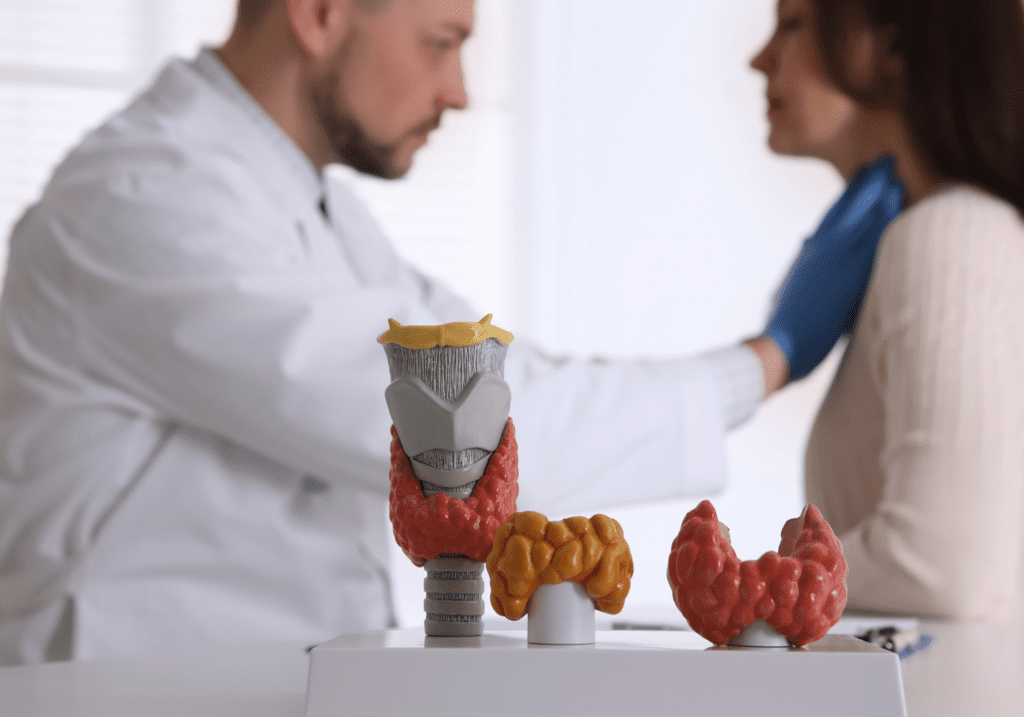
In fact there are 6 known causes:
1 – Hypothyroidism (Underactive Thyroid):
Autoimmune thyroiditis (Hashimoto’s thyroiditis): An autoimmune condition where the immune system attacks the thyroid gland, leading to inflammation and reduced thyroid function.
Iodine deficiency: Lack of iodine in the diet can lead to an underactive thyroid.
Certain medications: Some medications can interfere with thyroid function.
2 – Hyperthyroidism (Overactive Thyroid):
Graves’ disease: An autoimmune disorder that causes the thyroid to produce excessive amounts of thyroid hormones.
Toxic adenomas: Nodules or lumps in the thyroid gland that produce too much thyroid hormone.
Thyroiditis: Inflammation of the thyroid gland, which can temporarily cause an excess release of thyroid hormones.
3 – Thyroid Nodules:
Benign nodules: Non-cancerous growths on the thyroid gland that may or may not affect hormone production.
Cancerous nodules: Thyroid cancer can also present with nodules, but it is less common.
4 – Thyroiditis (Inflammation of the Thyroid):
Viral or bacterial infections: Infections can cause inflammation of the thyroid gland.
Postpartum thyroiditis: Inflammation that occurs after childbirth, affecting thyroid function.
5 – Genetic Factors:
Family history: Thyroid disorders can have a genetic component, and a family history of thyroid issues may increase the risk.
6 – Other Factors:
Stress: Chronic stress can impact thyroid function.
Pregnancy: Changes in hormone levels during pregnancy can affect the thyroid.